If you’re planning a new project on your property, you’re likely to hear contractors use the term grading. Whether the goal is to build a home addition, install a driveway, improve drainage, or prepare space for a future outdoor living area, grading plays a major role in how well the project turns out. Without it, you could be left with an uneven yard that floods after every rain, soggy crawl spaces, or a driveway that turns into a mud pit.
Good grading shapes the land so it manages water correctly, supports structures safely, and stays stable over time. It is one of the most important steps in protecting your investment and improving your property’s long-term health.
Why Grading Matters in Our Area and When To Schedule Service
The soil in the Sandhills Region is mostly sandy with pockets of red clay. Water moves through sand quickly, but when it hits clay, the runoff can pool or run straight toward foundations. Because of this, local building codes typically require the ground to slope at least six inches downward over the first 10 feet away from the foundation.
Good grading provides a smooth, stable base for building structures such as patios, sheds, garages, or retaining walls. Even smaller projects, like walkways or garden spaces, last longer and look better when the ground beneath them is properly shaped.
While site preparation and grading are essential for new construction, some established properties need grading help, too. Many older homes in the area never met that standard, and new homeowners discover the problem the first time the basement takes on water. Professional grading contractors fix the slope so water flows away from the structure.
You most likely need help fixing the slope of your property if you notice:
- Water pooling after rain.
- A sinking or uneven driveway.
- Erosion on sloped areas.
- Soft or unstable soil.
Whatever the project, the site comes first. Skipping this step almost always leads to expensive fixes later.
Property Leveling Techniques Homeowners Should Know
Different projects call for different property leveling techniques, which include:
- Rough grading to create the general shape of the land is the first major step and sets the foundation for the final grade.
- Fine grading to smooth and sharpen the details, especially before installing sod, concrete, or gravel.
- Slope grading to adjust the angle of the land so water flows away from structures rather than toward them, preventing drainage problems.
- Cut-and-fill leveling, which involves removing material (cutting) or adding material (filling) to create a usable surface for outdoor buildings, driveways, or large patios.
- Drainage grading focuses specifically on guiding water in a safe direction.
What a Grading Project Typically Involves
Grading property isn’t just about moving dirt around; projects begin with an evaluation, where the contractor assesses the natural slope of the land, how water drains, and whether there are soft or unstable spots that need attention. From there, they plan the final grade, determining the slope of the ground and where water will drain.
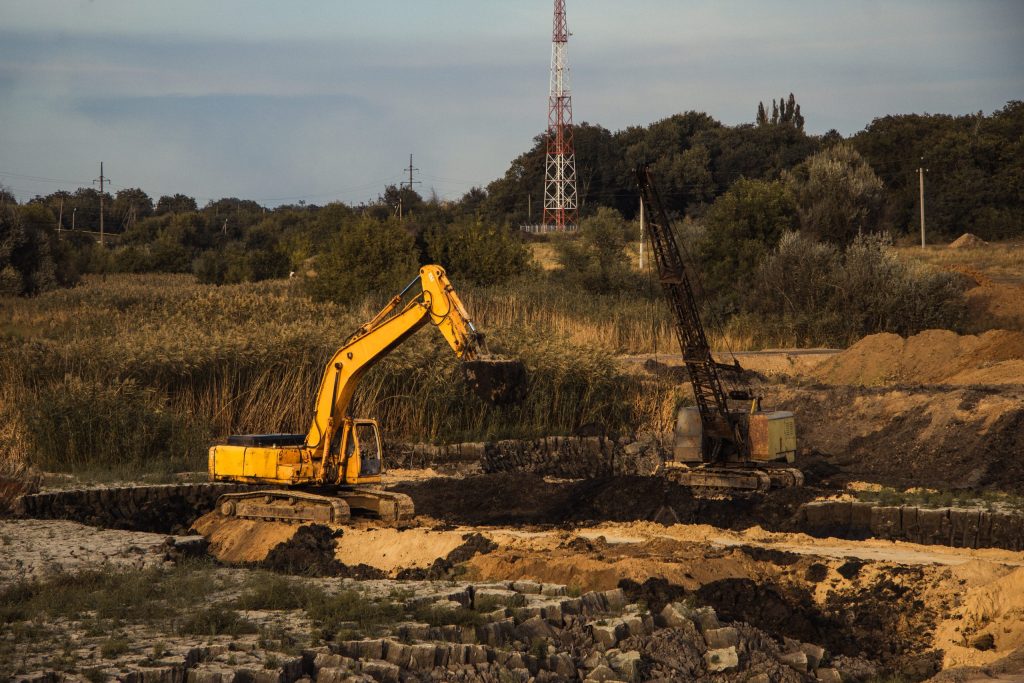
Then work begins. The crew removes soil from higher areas and adds soil where necessary to create a balanced, even surface. They’ll compact the soil for better stability, preventing sinking foundations, low spots, or sloping driveways and sidewalks as the loose soil settles.
Finally, the crew uses machinery to refine the grade, creating a smooth, properly sloped surface that’s ready for construction or landscaping.
Choosing a Contractor for Grading Projects
Not all grading companies offer the same level of expertise or equipment. When searching for a contractor, look for a business that specializes in grading, not just general landscaping or construction.
Ask questions like:
- How many years of experience do you have?
- Are you familiar with the specific soil conditions and rainfall patterns in the region?
- Do you offer complete land grading services, including compaction, drainage planning, and cleanup?
- What type of equipment do you use for larger or more complicated projects?
- Do they have references from past clients with similar projects?
Avoid hiring any company that quotes a price without seeing the property first, and watch out for contractors who suggest covering drainage problems with fill dirt instead of fixing the slope. Without proper land preparation, you’re setting yourself up for problems in the future.
Get a Quote From Cornerstone Grading
Grading is one of the best long-term investments you can make. Land that’s shaped and leveled correctly protects your home’s foundation, reduces drainage problems, and creates a safer, more usable space for outdoor projects.
Whatever your goals, getting help from grading professionals helps ensure the job is done right the first time. When you’re ready for a dry yard and peace of mind, call Cornerstone Grading today at (704) 389-0871 or request a free estimate online. Our team will inspect your property, explain your options, and get the grading done right the first time.